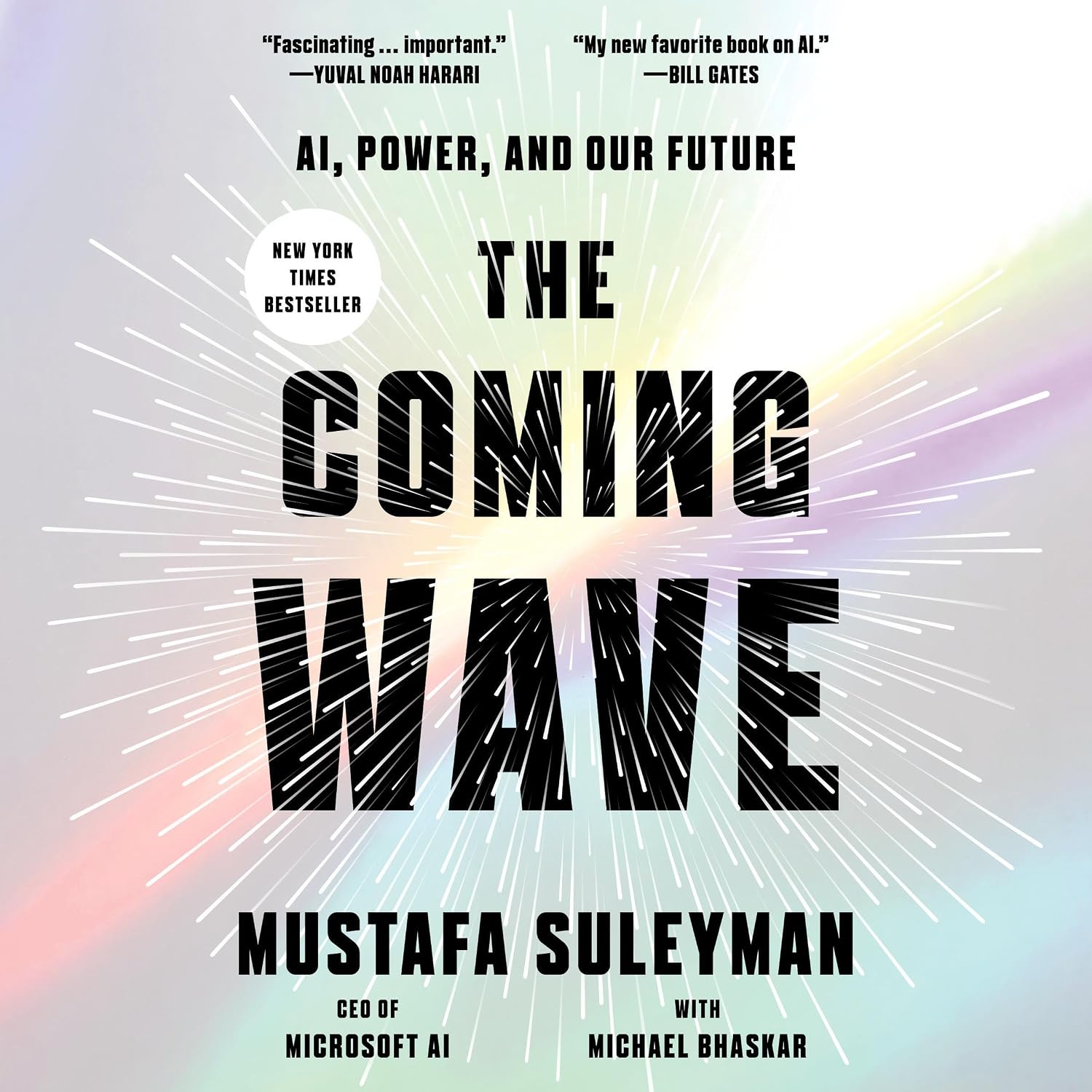
What I found most interesting about The Coming Wave is that I came away agreeing with much of Suleyman’s description of the problem, but considerably less convinced by his proposed solution.
He makes a compelling case that AI and other emerging technologies are becoming increasingly powerful, widely available, and difficult to control. Where I became more skeptical was in the final section of the book, where he outlines ten steps toward technological containment.
Many of those ideas make sense individually. Better safety, more independent testing, stronger government expertise, and greater accountability from the companies developing these technologies all sound reasonable. But taken together, the solution seems to require an extraordinary level of cooperation between companies, governments, researchers, international organizations, and the public.
That is where it starts to feel somewhat utopian to me.
What I found even more interesting, though, was realizing how much my own thinking about AI has changed.
When I first started seriously learning about AI, I approached the subject with a mixture of curiosity and caution. The more I have studied it, used it, and watched the technology develop, the more I find myself leaning toward the accelerationist side of the debate.
That does not mean I think the risks should be ignored. Suleyman raises legitimate concerns, and many of them deserve serious attention. But I am becoming less convinced that broadly slowing AI development is either realistic or necessarily desirable.
There is simply too much potential in areas such as medicine, science, education, engineering, and productivity to treat technological progress as the problem.
For me, the more interesting question is no longer whether we can contain the coming wave entirely, but how we manage the risks while continuing to move forward.